Key Formulas
Mean: x̄ = Σx / n
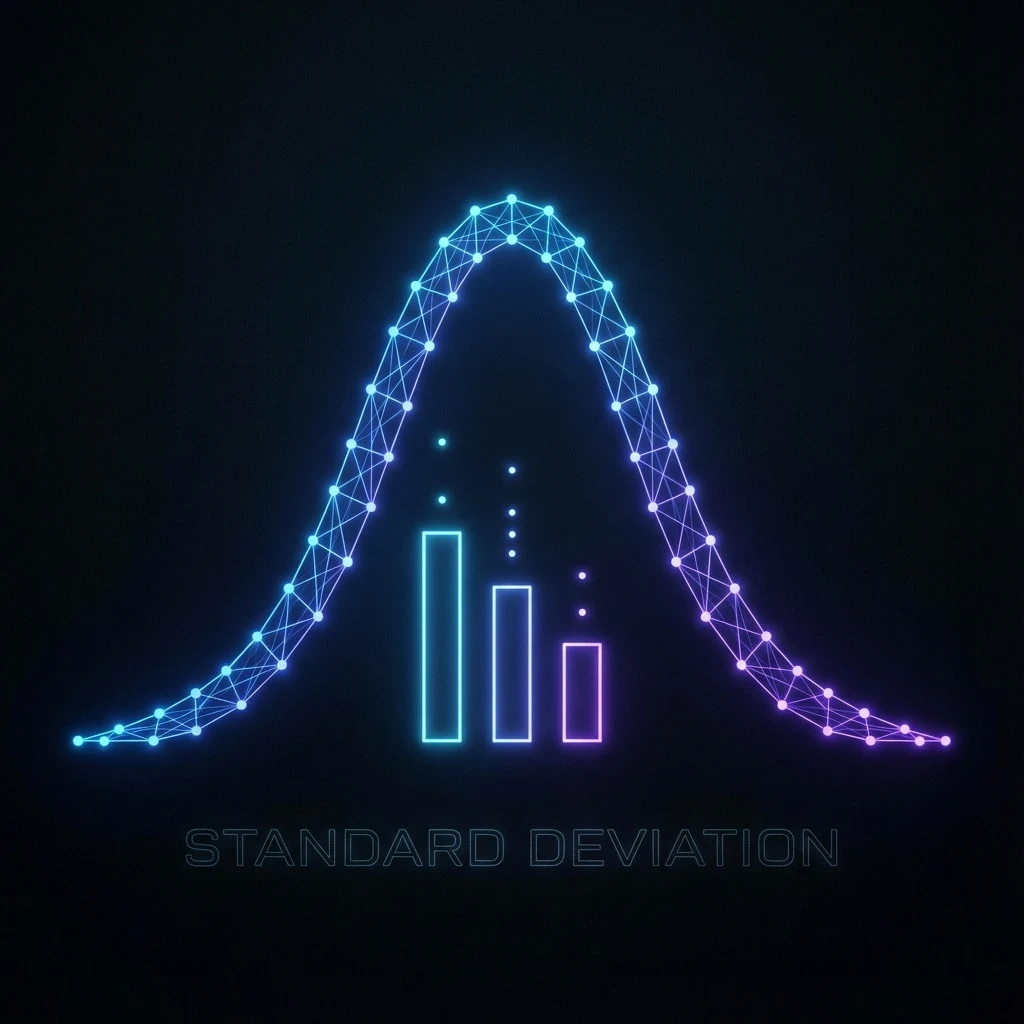
Standard Deviation: σ = √(Σ(x−x̄)² / n)
Standard Deviation: σ = √(Σ(x−x̄)² / n)
Common Mistakes
- Forgetting to sort data before finding the median.
- Confusing variance and standard deviation — variance is squared units; standard deviation is the square root, back in original units.
- Using the mean on heavily skewed data, like incomes, where the median gives a more honest picture.
Frequently Asked Questions
Why do we square the deviations in standard deviation?
Squaring makes all deviations positive (so they don't cancel out) and weights larger deviations more heavily, making the measure sensitive to outliers.
What is variance, and how does it relate to standard deviation?
Variance is the average of squared deviations from the mean; standard deviation is simply its square root, converting the measure back into the data's original units for easier interpretation.