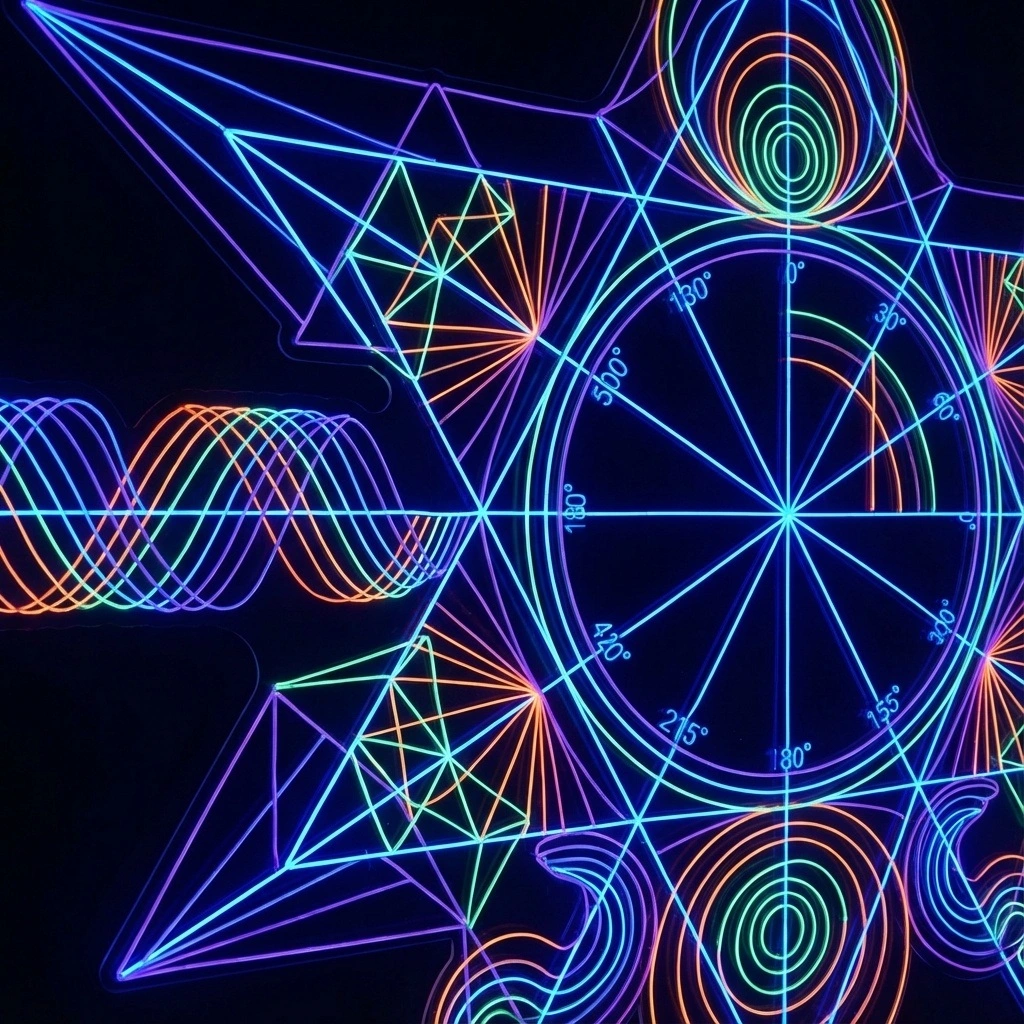
Core Identities
sin²θ + cos²θ = 1
tan θ = sin θ / cos θ
SOH: sin = opp/hyp · CAH: cos = adj/hyp · TOA: tan = opp/adj
tan θ = sin θ / cos θ
SOH: sin = opp/hyp · CAH: cos = adj/hyp · TOA: tan = opp/adj
Common Mistakes
- Wrong calculator mode — mixing up degrees and radians is the single most common trig error on exams.
- Mislabeling opposite vs. adjacent — these labels depend on which angle you're using, not fixed triangle sides.
- Applying SOH CAH TOA to non-right triangles — use the Law of Sines or Cosines instead for those.
Frequently Asked Questions
What's the fastest way to memorize the unit circle?
Focus on the 30-45-60 degree family of angles in the first quadrant — every other angle on the circle is just a reflection or rotation of these three reference values.
Why does sin²θ + cos²θ always equal 1?
It comes directly from the Pythagorean theorem applied to the unit circle, where the hypotenuse is always 1, making this identity true for every possible angle.