1. The Reality Check
Two people can weigh the exact same amount and have the same BMI, yet one could be visibly lean and muscular while the other carries significantly more fat — the scale and BMI simply can't tell the difference. Body fat percentage can.
2. Plain English Definition
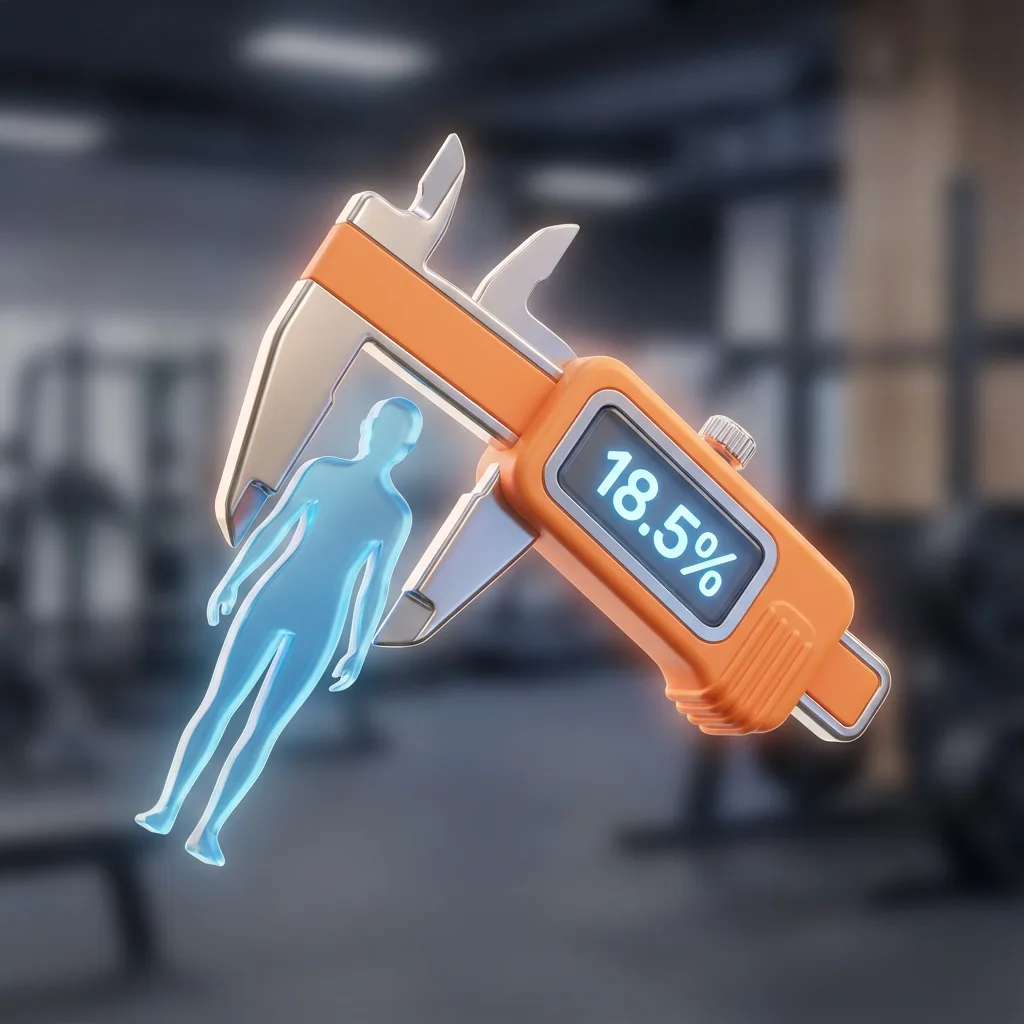
Body fat percentage measures what portion of your total body weight is fat mass versus lean mass (muscle, bone, organs, water) — a far more meaningful health and fitness metric than weight or BMI alone.
3. Why This Beats the Scale
Muscle is denser than fat, so a person gaining muscle and losing fat simultaneously might see little change on the scale — while their body composition, and how they look and feel, improves dramatically. Body fat percentage catches this "recomposition" that the scale misses entirely.
4. Key Terms
- Essential Fat: The minimum fat your body needs to function (roughly 3-5% for men, 10-13% for women).
- Lean Mass: Everything that isn't fat — muscle, bone, organs, and water.
5. Next Steps
Use the Navy method calculator above with a simple tape measure to estimate your body fat percentage at home.