1. The Reality Check
Standardized test scores, growth charts, and salary benchmarks are almost always reported in percentiles — yet percentile is one of the most commonly confused statistics terms, often mixed up with percentage.
2. Plain English Definition
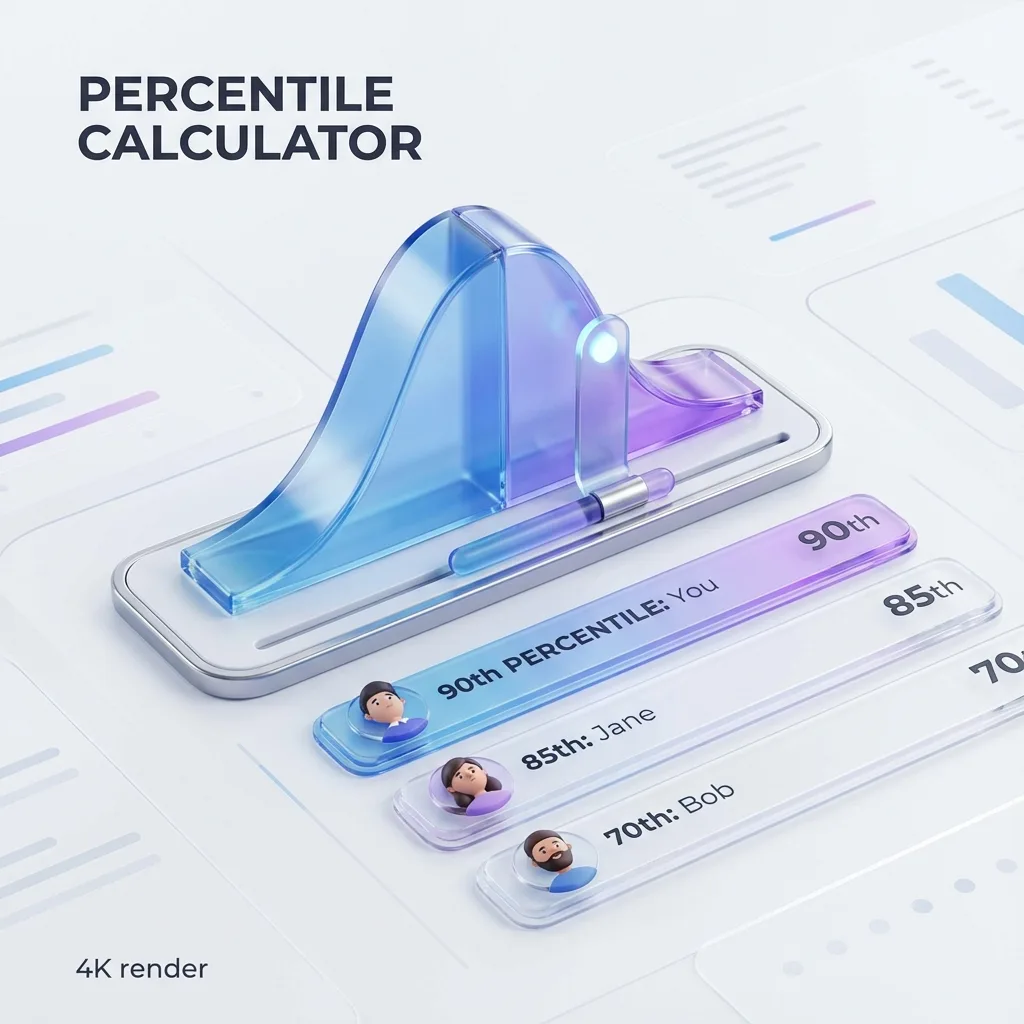
A percentile tells you what percentage of a data set falls below a given value — the 90th percentile means 90% of values are lower than yours.
3. Percentile vs. Percentage
These sound similar but measure completely different things. A percentage is a raw proportion (you scored 85%, meaning 85 out of 100 points). A percentile is a ranking (you're in the 85th percentile, meaning you scored higher than 85% of other test-takers) — the same number can represent very different performance levels.
4. Key Terms
- Rank: A value's position within a sorted data set.
- Quartile: Specific percentiles (25th, 50th, 75th) that divide data into four equal parts.
Frequently Asked Questions
Can a score of 100% and being in the 100th percentile mean different things?
Yes — a 100% score means you answered everything correctly; the 100th percentile means you outperformed everyone else, which is possible even without a perfect score if the test was hard.