Concept Overview: The Engine of Longevity
Position sizing is the calculation of exactly how many shares, contracts, or lots a trader should buy or sell on a single trade. While most beginners obsess over where to enter (strategy), professionals obsess over how much to buy (sizing). In quantitative terms, position sizing is the process of aligning your trade conviction with your account’s volatility tolerance. It is the primary tool used to prevent "Account Blowouts" and ensure that no single losing streak can end your career.
Market Relevance: The Quant’s Secret Weapon
Even a strategy with a 70% win rate can lead to bankruptcy if the position sizing is incorrect. This is due to the Sequence of Returns Risk—the mathematical reality that you will eventually hit a string of 5 or 10 losers in a row. Sizing is how you survive that string:
- Risk of Ruin: A statistical concept that calculates the probability of your account hitting zero. Proper sizing reduces this probability to near-zero.
- Professional Scalability: Large hedge funds don't just "buy a lot"; they calculate the Value at Risk (VaR) for every tick of price movement.
- Psychological Equanimity: When your position size is correct, a "Stop Loss" hit is merely a business expense, not a personal tragedy.
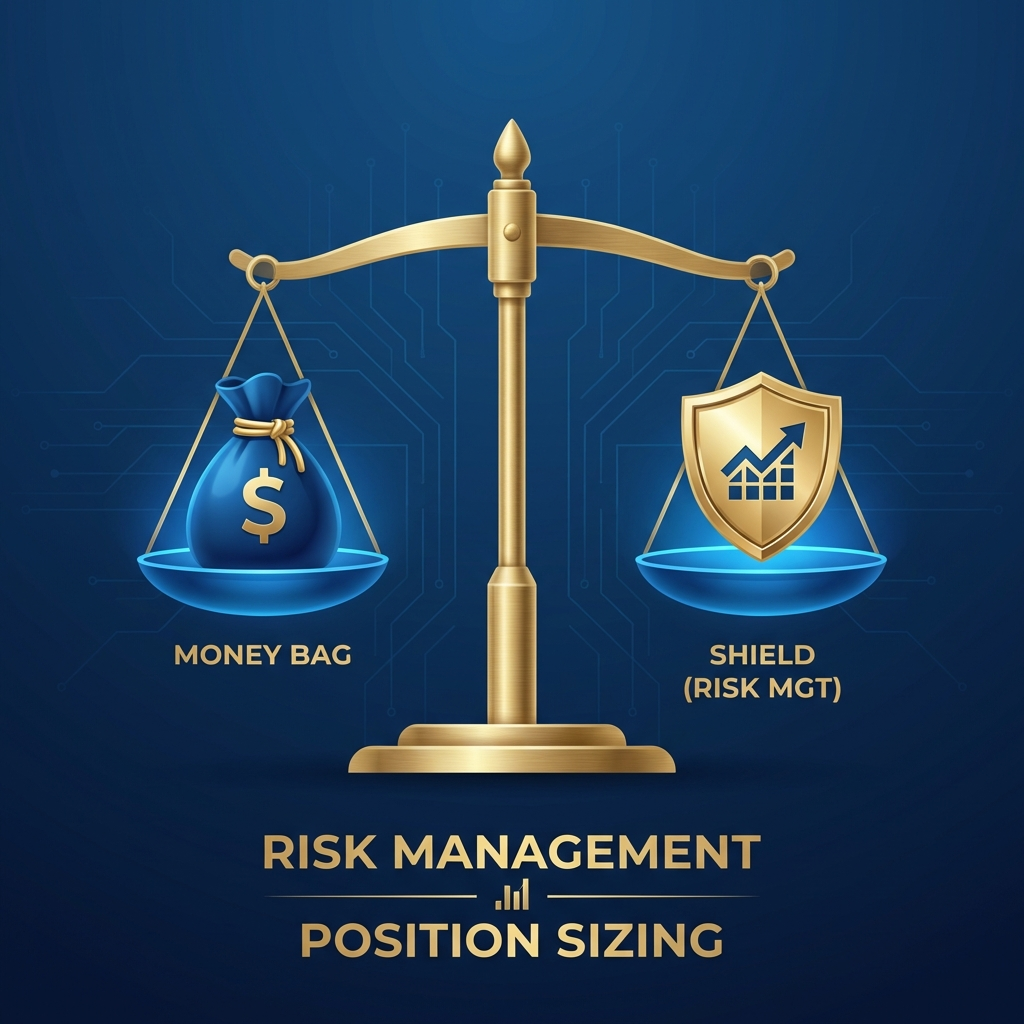
Visualizing the Trade: The Shield and the Sword
Think of your total trading capital as your "Army."
- The Strategy: This is your sword. It tells you when to attack.
- Position Sizing: This is your shield. It tells you how many soldiers you can afford to lose in a single skirmish while still having an army left to win the war.
Key Terminology
- Equity: The total cash value of your trading account.
- Account Risk (%): The percentage of total equity you are willing to lose if the trade hits your stop (usually 1-2%).
- Trade Risk (Points): The distance between your Entry Price and your Stop Loss Price.
- Slippage: The difference between your intended stop price and the actual execution price (must be factored into sizing).